Ch. 4 – Relationships and Sexuality

As important as this chapter is, it was admittedly difficult to initially connect it to a long term goal – especially my ling term goal involving cardiovascular health. If the chapter’s contents were looked at more specifically, not as a whole, it became slightly easier. This led to some surprisingly intricate points that were made that connect directly to my goal (or any goal for that matter). The first of these points revolved around friendships. “Friendships are often the first relationships we form outside our immediate families, and they can be some of our most stable and enduring” (Donatelle, 2019, p. 73). Friendships are some of the most fundamental relationships that we will experience in our lives. I feel this is even more so the closer you are to those friends. I have a relatively small group of friends but feel that I am extremely close with each individual friend. None more so than my best friend, who is not only my roommate but my running buddy mentioned in previous blog posts. On days where I am feeling off, my friend is there to drive me to keep going or to support me if I can not keep going that day.

The second of these points that stood out to me was that of self-esteem and self-acceptance. It is incredibly important to view ourselves in a positive light. Not only during this time of striving for a long-term goal but in life in general as well, it can change the outcomes we work towards if we do not first have the confidence and belief in ourselves to get the job done. Along with decisions we make and our ability to complete tasks, self-esteem and self-acceptance play a role in our relationships as well. “Your perception of yourself influences your relationship choices” (Donatelle, 2019, p. 72). The people we surround ourselves with are often said to share similar traits to ourselves, and I feel that this is backed up by this quote. The way we see ourselves is often the way our closest friends act as well. In this way, I feel that my friends are some of my biggest supporters and the first people I can go to in tough times or times of need.

This overall has a huge impact on the success of the attainment of my long-term goal, especially down the line this semester. My friends will be there for me to support me when I have a tough day or when I think that I am failing to lift me up and keep me on course. This week was another trying week for me. I had more days of trying to run more, but not being as successful as I would have hoped. I put some of the time I was unable to run towards starting yoga and meditation, and I hope to get my roommate/friend to start doing it with me in addition to running. I hope that this will help me down the line. In relation to the chapter, I also think that this could lead to a progression in our relationship as well, with time relaxing, destressing, and bettering ourselves, together.
Ch. 3 – Stress

Chapter 3 highlighted the many aspects of stress. We are a generally over-stressed society, and college students are at an exponentially higher rate of experiencing stress than any other age group. One thing from the chapter that immediately stuck out to me was the sleep problems that can arise from stress. “Sleep is much more important than people realize. Sleep conserves body energy and restores you physically and mentally” (Donatelle, 2019, p. 56). Sleep is something that has always seemed to be more difficult for me. I often have a hard time falling asleep and/or staying asleep. Despite almost always feeling rested regardless of the length of my sleep, I know that the lack of sleep is detrimental to my body and my health. As recommended in the book, I often find myself setting a sleep schedule where I try to go to bed at roughly the same hour every night in an attempt to get my body and mind used to this being the time I fall asleep. Although it does not always work, it is a good way to get myself into the habit of sleeping consistently and through the night. Another issue that I have with sleep is the use of technology. I carry my stress throughout the day and into the night, and I have often found watching videos or listening to music calms me down. However, the use of technology to do so is a negative so close to sleep.

Another topic that caught my attention in the chapter was the management of stressors and the stress that we carry throughout life. I find myself to be above average when it comes to showing emotion. I have never been afraid to show my emotions and, although rare that I do cry, have cried in front of friends and family without shame or regret before. This plays directly into the idea of laughing and crying as a stress reliever. “Smiling, laughing, and even crying can elevate mood, relieve stress, and improve relationships” (Donatelle, 2019, p. 64). Emotions are our best way of communicating our feelings, and I feel that this is a great way to relieve ourselves of our stresses. Our emotions can communicate that we need help or attention, even when we can not. With the right support from our family and friends, these emotions can lead to raised endorphins and lowered stress through the attention and care of those around us.

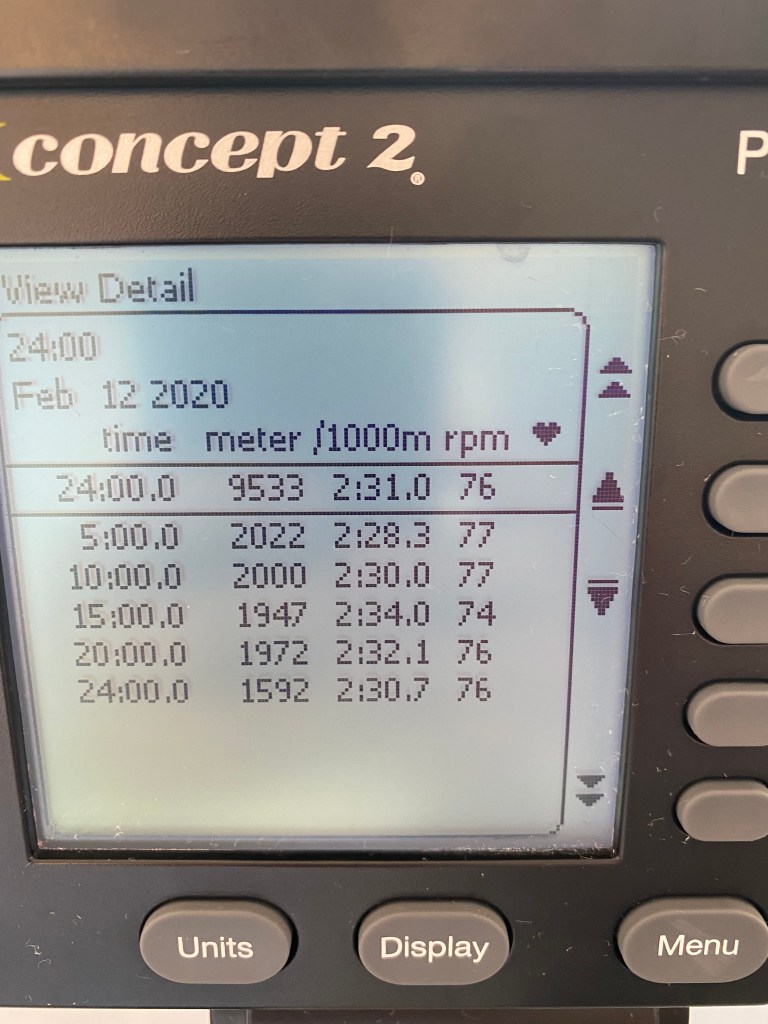
This week was another difficult one. Sleep was a burden on my days, as I felt unusually tired after multiple days with a lack of sleep. This became days where I did not have the energy to run and even some days where I was so tired that I needed to take a nap after class. My work piled up and left me little to no time to run almost every day, on top of my friend being in the same sleep-deprived boat. Despite this, I did see some improvements in my cardiovascular health. Luckily, one of my classes requires cardiovascular work every Monday and Wednesday, so I am able to both put in work during these classes as well as see the progress (or lack thereof) that I have made. This week, I was able to ride the stationary bike for the longest amount of time to date (in the class) while also maintaining the same pace and being less fatigued at the end. My stress levels were definitely tested this week, but I was able to manage them through the support of my friend as well as pushing through to create the progress I needed.

CH. 2 – Psychological Health

Chapter 2 had some very interesting and important information presented. The first piece that left an impression on me was Maslow’s hierarchy of needs. I had been familiar with the hierarchy prior to reading the chapter, .but the book’s explanation of it combined with the psychological aspects of our health changed the way I looked at it. From this new angle, I was able to see the impact our emotions, along with the other aspects of our psychological health, have on the way we live our lives and the success we have at doing that. “According to Maslow’s theory, a person’s needs must be met at each of these levels before that person can ever be truly healthy” (Donatelle, 2019, p. 27). The way I had previously looked at the hierarchy was that the importance of each level increased the farther you get down towards the fundamental necessities included in the “survival needs” level. However, upon reading chapter 2, I now realize that I viewed the hierarchy as more of a suggestion to attain better health. I now know that the hierarchy is the necessities to true and whole health.

In terms of the work I did this week to achieve my health aspect goal, the hierarchy plays into the ability to attain success during the process as much as at the attainment of the goal. At the simplest of levels, I need to fulfill my survival needs to not only be healthy, but also to succeed in the work I am putting in. The exercise itself is a necessity, however, I also need proper food, water, and sleep in order to be healthy and perform effective exercise. On a more complex level of the hierarchy, I need to fulfill my esteem goals as well in order to be successful. I need to have self-respect for myself, trying not to talk bad of any potential slip ups or failures I may have on the road to reaching my goal. I also need to have respect for others, shown through my the friend I mentioned I am running with in a previous blog post. I need to respect his exercise as well, as I can not go faster or slower than what he can, and likewise. We have to respect each other’s abilities and what we are able to handle on each individual day. The last part of the esteem needs are accomplishments. I must be able to understand when I achieve as successful and worthy accomplishment and not be afraid to celebrate a step in the right direction to keep moving forward towards my goal.

The most impactful thing I encountered in the chapter was the dimensions of psychological health and the influence and strategies that accompany these dimensions. In particular, the dimension of social health had an impact on me upon reading about it. “Social health includes a person’s interactions with other people individually and in groups, the ability to use social resources and support in times of need, and the ability to adapt to a variety of social situations” (Donatelle, 2019, p. 28). I have always been a reserved person, not going out of my way to trouble others with things I perceived as my own actions or problems. However, the book says that this is exactly what we should do. Use the support system we have around us to better our lives, our health, and the goals we intend to achieve.

“Initial social support may be provided by family, but as we develop, the support of peers becomes more and more important. We rely on our friends to help us figure out who we are and what we want to do with our lives” (Donatelle, 2019, p. 30Family and friends are both strong ties to the outside world when it may seem like our lives and/or goals are kept on the personal side. Family is often a built in support system and we can use the assets of family and friendship to our advantage. In my personal situation, my family is an extremely important support system to me. Just like when I war running in high school, my dad still has unwavering support for my running career, despite it not being competitive anymore. On the flip side, my friends are just as important, as can be seen through my friend running with me in order to get exercise for himself, but also to provide support for one another.

The support system we have has a direct link back to Maslow’s hierarchy, with our ability to enhance and maintain our self-esteem being directly affected by the support we get. “Members of your support system can help you feel good about yourself and force you to take an honest look at your actions and choices” (Donatelle, 2019, p. 32). Support systems are so important to our ability to keep moving forward and keep our spirits up on the way to achieving our goals.

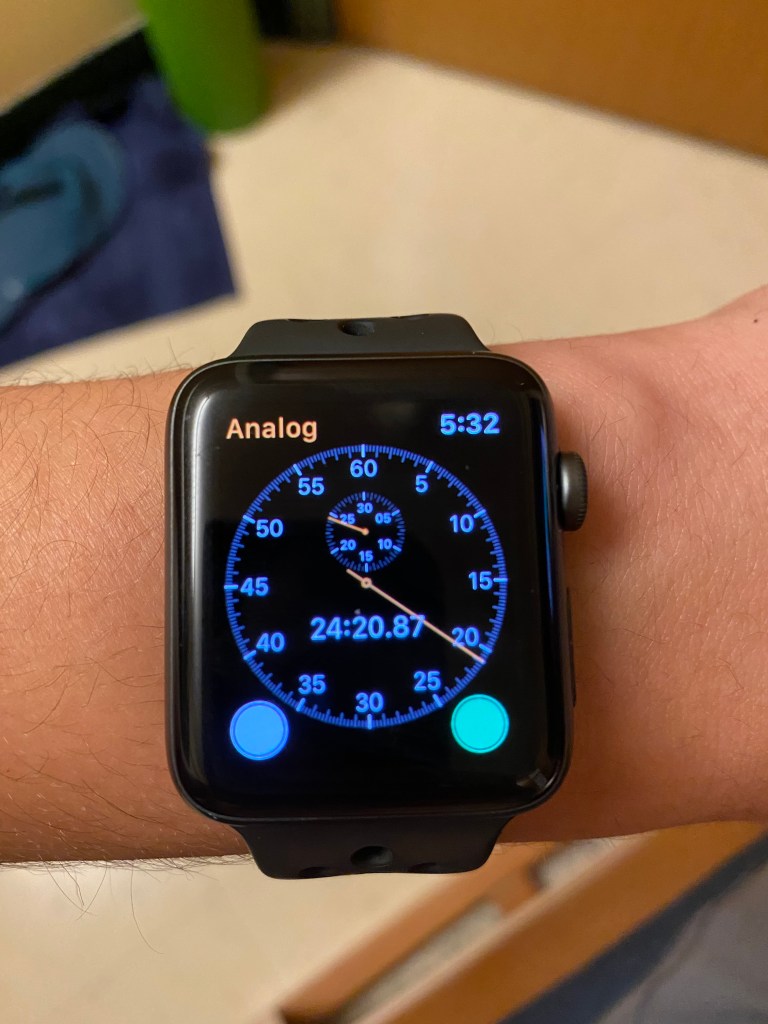
This week was a tough one when it came to working towards my goal. I physically felt off compared to usual, but do not have a concrete reason why. This led to a dip in my confidence when it came to my running, and I focused solely on running for 20 minutes rather than add the stress of pacing and distance on top of just simply trying to run to keep up my exercise routine and goals (This is why my results from my run are just on a stopwatch rather than my typical running data tracker). On top of this, my friend was either not around or not able to run with me when I wanted to. My support system was conveniently tested in the week of learning about that same thing, but I was able to motivate myself as well as get motivation from my dad to push through. I struggled in my smaller, more readily achievable goals I had set for myself. An early set back was testing for me this week, but I still have a positive outlook on my goal that I not only can achieve it, but that I will exceed it in the end.

Ch. 1 – Healthy Change

Chapter 1 focused on the many factors of our health and how we can improve upon it, as well as the influences that we may or may not have control over. The most important factor to improve our health is preparation. So often, people go into an activity that can lead to what is ultimately their long-term goal with no plan as to how to achieve that goal. Through strategies such as SMART goal setting, anticipating and knowing your potential barriers, and getting help from others to attain your goal, the process can be a much more successful one.

The topic in chapter 1 that had the most impact on me upon reading it was about short-term goal setting, better known in preparation as shaping. Shaping gives you the ability to see improvement more easily as well as to attain your goals in a more efficient way. In regards to my aspect for this semester, cardiovascular health is heavily based in shaping. By using shaping, I can set target goals for running distances in a week, running times in a week, and even how many times I want to run total in a week. In the end, the way that you shape your exercise can lead to a better development towards your ultimate goal as long as you are prepared for the long haul. “Your current habits didn’t develop overnight and they won’t change overnight, either” (Donatelle, 2019, p. 14).

When it comes to setting SMART goals, they must be Specific, Measurable, Action-oriented, Realistic, and Time-oriented (Donnatelle, 2019, p. 14). goals that have true significance to the future development and success at achieving the ultimate goal are Specific and Measurable. The most important aspect of these SMART goals is that they are attainable. “Knowing that your goal is attainable increases your motivation. This, in turn, leads to a better chance of success and to a greater sense of self-efficacy – which can in turn motivate you to succeed even more” (Donatelle, 2019, p. 14). SMART goals will be a large factor in my success and progress towards my ultimate goal of running a 5k in under 19 minutes. I will not instantly be able to run the same time that I ran in high school while training daily for that purpose. I will most likely not even be able to run 19 minutes right away. The purpose of the SMART goals will be to gradually work up to a 19 minute 5k over the course of the semester while keeping my motivation high and seeing progress throughout. SMART goals to better my chance of success would be to run for 20 minutes every time I run this week (which I was able to achieve). Next week, a SMART goal would be to run for 30 minutes every time that I run. In the future, variants of SMART goals would be through runs of certain distances or keeping up certain paces on my runs.

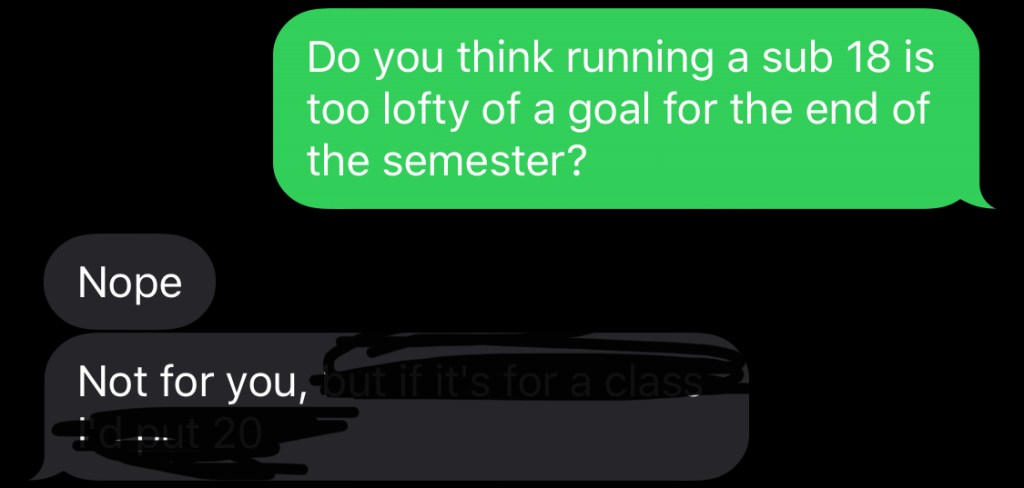
The third, and possibly most important, topic I found to be essential is the anticipation of barriers and dealing with them. Running comes with its ups and downs. The simplicity of a good and bad day can make the difference between a 19 minute 5k and a 22 minute 5k. the potential for injury is also high in running, especially since I have not run consistently in nearly 2 years. However, the goals that we can anticipate are the ones that we need to focus on and attempt to avoid and fight against. “Even with the strongest motivation, overambitious goals can derail change” (Donatelle, 2019, p. 14). An overambitious goal for me would be trying to run a 19 minute 5k right now, or even trying to run 4 miles at too fast of a pace (i.e. 4 miles in 25 minutes – 6:15 per mile). By avoiding overambitious goals such as these, I can take the smaller but more beneficial steps towards the ultimate goal. Likewise, my preparation relies heavily upon the support I get. Without support, or even with support from those who may oppose the attainment of your ultimate goal, the climb to the top of the mountain will be sluggish and just that much harder to complete (Donatelle, 2019, p. 15). In my case, my dad was an avid supporter of my running career while I was in high school. When I was thinking of my ultimate goal, I asked his opinion on my setting a time of 19 minutes for a 5k as my goal. He told me that it was a good goal, but also that he wouldn’t be surprised if I reached 18 minutes as well. On top of this, my best friend is running with me every time I run. This gives me the extrinsic motivation of not only being with someone to take the stress off of the running but also the reassurance that I am helping someone else benefit from my actions as well (as he is trying to lose weight and get into better shape).

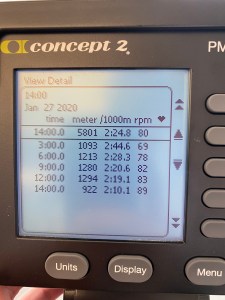
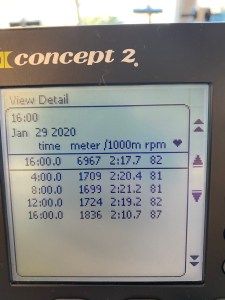
My progress this week was hard to view at times. There were days when I would get up to run and would feel like it was not my day. I struggled through some runs and even had to cut one short that I was hoping to get to 30 minutes on. However, with the new knowledge of shaping and setting SMART goals, I know that the 20 minutes I ran instead of 30 was still a successful step in the right direction. On top of my runs, One of my classes is cardiovascularly intense. In the class, I ride a bike with the intention of viewing, analyzing, and improving upon the results and statistics of my workout. Over the course of the week, I was able to improve my pace from the first session to the second session despite having a 14% increase in the duration of the workout. I think that the goals I set based on the information in chapter 1 is what will keep me on track and help me keep my eye on the prize for the current and eventual progress I want to make towards my ultimate goal.

Session 1
Session 2

Introduction

Hi everyone! My name is Kyle Rendon. I am an Exercise Science major and, despite being a requirement in my major, I do see this class as potentially abundant in benefits and positive outcomes. My health aspect for the semester is going to be cardiovascular health. . I was a long-distance runner in high school and began a college career as well. However, I was injured early in my freshman year and the injury went undiagnosed for upwards of 9 months, leading to extended treatment and recovery periods. This ultimately led to the decision to stop running competitively, as I was transferring schools (to BSU) and found myself out of the shape that I hoped to regularly be in whilst I was running. I hope that my pre-existing drive to begin running again for my own physical and mental health, coupled with the drive from this class will allow for me to get back to the sport and hobby I love, as well as show progress in my cardiovascular health and all-around fitness. As a concrete goal, I hope to set my sights high and run under 19 minutes for a 5k by the end of the semester.

Design a site like this with WordPress.com
Get started