Ch. 14 – Environmental Health

This chapter was a big variation from the norm of talking about individual health. The focus of this chapter was on the health of the earth as well as the impact that that earth and certain materials/substances may have on health. The first thing that caught my attention in this chapter was the Air Quality Index.It was quite shocking to see the amount of pollution that exists in the air and the fact that so many people around the world live with high index ratings as their norm. “The higher the AQI value, the greater the level of air pollution and associated health risks” (Donatelle, 2019, p. 334). This means that people living in areas with high AQI readings are at a hugely increased risk of contracting diseases.

The second thing that caught my attention in the chapter was in regards to human waste. “Each day, every person in the United States generates nearly 4.5 pounds of municipal solid waste, more commonly known as trash or garbage. This totals about 258 million tons of trash each year” (Donatelle, 2019, p. 342). This is a staggering statistic, stating that so much waste is produced by Americans on even just a daily basis, let alone the astronomical numbers produced per year. On top of this, it is even crazier to think that Americans only recycle about one-third of the waste we generate (Donatelle, 2019, p. 342).

The final part of the chapter that stuck out to me was the effects and main source of indoor air pollution. Among the many things that cause indoor air pollution, the last one that I would have thought of was Environmental Tobacco Smoke. Also, known as secondhand smoke, this source of indoor air pollution is greater than asbestos, home heating, radon, lead, and even mold. Yet even with everyone having the possibility for the latter threats, environmental tobacco smoke is still the leading cause despite not everyone smoking. Environmental tobacco smoke “contains carbon monoxide and cancer-causing particles. The level of carbon monoxide in cigarette smoke in enclosed spaces has been found to be 4,000 times higher than that allowed in the clean air standard established by the EPA” (Donatelle, 2019, p. 336).

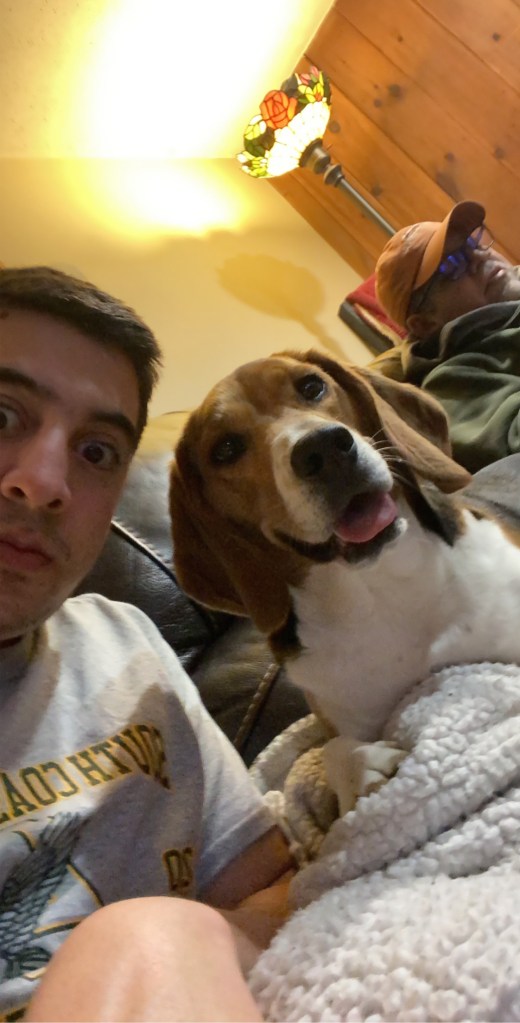
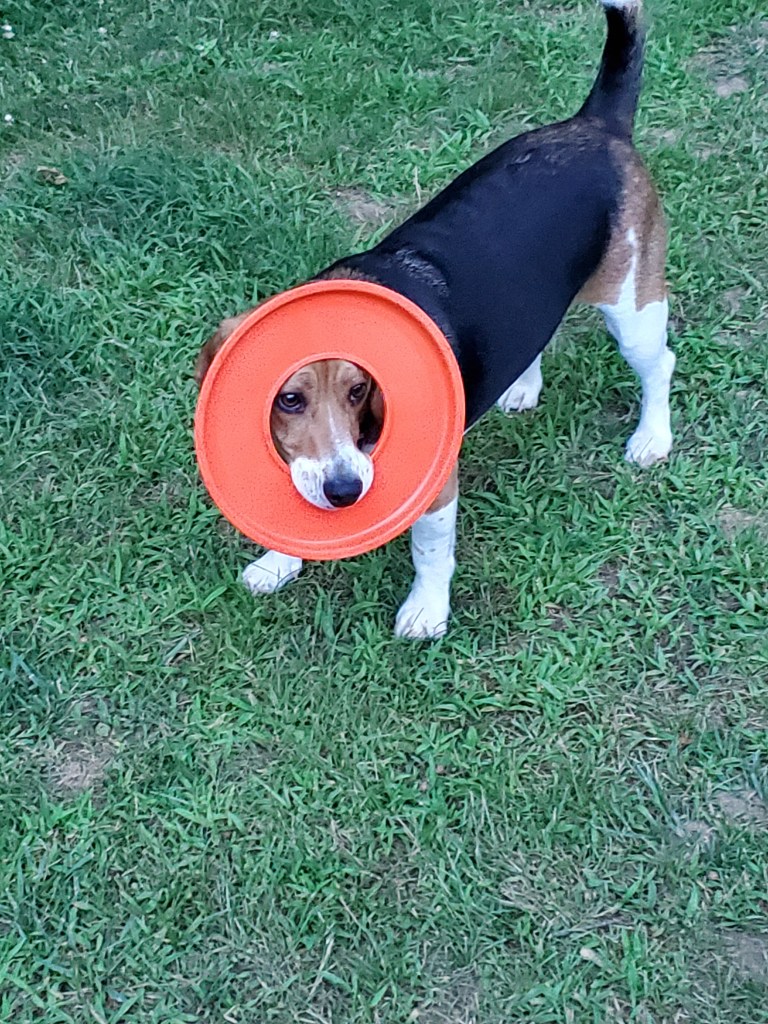
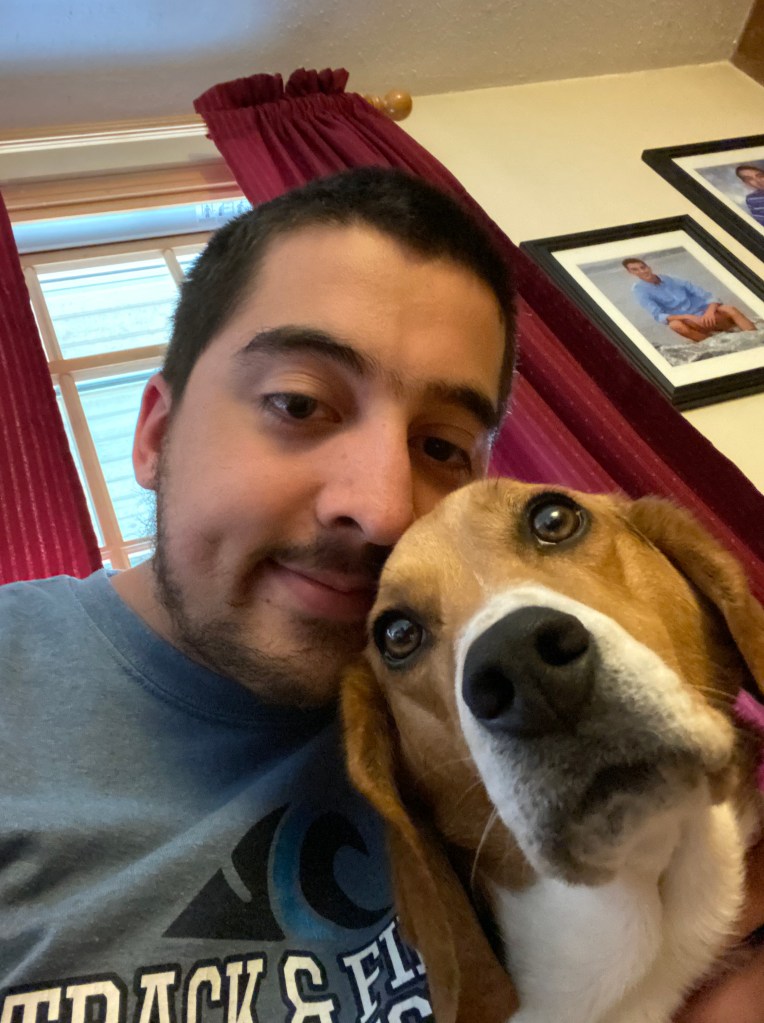
Overall, this semester has been a big change for all of us. The possibility to running a 5k road race to see whether I would reach my goal of a 19 minute 5k became impossible due to the current situation. However, I was able to see improvement of my running during everyday-runs and found a new passion that I did not have before. I began to enjoy running again, which I haven’t been able to do since high school. Although I was not able to time myself in a race format, I was able to make progress in running, overall health, and mental health as well. Despite not technically meeting my goal, I feel that I have been able to improve so much more outside of just that one goal. Here is one last picture of my dog and I after going for a nice run in the recent heat and nice weather.
Ch. 13 – Violence and Unintentional Injuries

This chapter had a strong message informing us on violence. The first major thing that stuck out to me in the chapter was about excessive noise and the potential for hearing loss/injury. It surprised me to find that teens and young adults are at a heightened risk due to listening to music at high volumes. The most prominent issue is MP3 players at maximum volume, coming in at 108 decibels, 23 decibels higher than the threshold for potential injury (Donatelle, 2019, p. 326). It is shocking that so many of us have witnessed someone listening to music at full volume before, and that person is at such a high risk for injury and/or hearing loss.Listening to music at full volume is closer to the noise level and danger of a jackhammer than that of a diesel truck.

The second thing that stuck out to me in this chapter was the difference between primary aggression and reactive aggression. “Primary aggression is goal-directed, hostile self-assertion that is destructive in nature. Reactive aggression is more often part of an emotional reaction brought about by frustration” (Donatelle, 2019, p. 309). It is strange because I never thought about the possible categorization of violence and/or aggression, but it does make sense in the context. Primary aggression is most connected to interpersonal violence, where the violence is intended and often known between assailant and victim. Reactive aggression is most accurately interpreted by an emotional outburst and/or violent action due to frustration or emotion.

The final thing that stood out to me in the chapter was the figure regarding child abuse and neglect victims by age. It was shocking to me to see that the numbers dropped drastically after the age of one and even became a steady decline as the age increased (Donatelle, 2019, p. 313 figure 13.4). Of course, in an ideal world there wouldn’t be any child abuse or neglect, but it was still something that surprised me to find out. I don’t know what I honestly thought the case would be, but it served as a definite knew source of knowledge for me.

I don’t necessarily know what to write about in terms of my health aspect, as I already updated my progression in blog 12. However, I do think that connecting this chapter to all of our health aspects is possible and important. No matter what our health aspects are, it is important to know that dangers of these different types of violences and the effects it can have on our health and the effort to achieve our goals. If anyone was going through these horrible things, they would have a hard time completing any progress towards their goal and would struggle to live a healthy lifestyle. It is important that we as a society keep a close eye on what is happening in the world regarding these issues and do our best to combat all the negatives that it may bring, that way everyone can work towards an improvement and a goal and live as healthy as possible.

Ch. 12 – Infectious Conditions

Chapter 12 had a strong focus on infectious diseases and Sexually Transmitted Infections. The first part of the chapter that stuck out to me was the differences between the common cold and influenza, as well as the particulars about the latter. The common cold and influenza are actually quite similar, with coexisting symptoms, but have a few differences that make all the difference. “Treatment is palliative – focused on symptom relief rather than cure. Signs of fly include body aches, fatigue, and fever” (Donatelle, 2019, p. 292). This shows that the common cold and influenza are very similar, yet have distinct differences that show how much more dangerous influenza can be.

The second thing that stuck out to me was the facts about antibiotic resistance. We often hear about antibiotics not working on some evolved bacteria, but some of the facts about preventing such a thing from happening are interesting. The main one that surprised me was about antibacterial soap and cleaning products. “the cleaning products industry adds antibacterial ingredients to many soaps and household cleaners. . . the germs that these products do not kill may become stronger than before” (Donatelle, 2019, p. 295). This shows us that the perception that we often have the antibacterial soaps and other products are our best defense against such things and the diseases they may cause is partially incorrect. The germs that survive the products become stronger and much more dangerous.

The final thing that stuck out to me in this chapter was HIV contraction via piercings and tattooing. Although it makes a lot of sense, it is definitely something that can be easily overlooked that these things can cause the contraction of HIV. “Dangerous pathogens can be transmitted with any puncture of the skin. Unsterile needles can transmit HIV, as well as other diseases” (Donatelle, 2019, p. 298). This is definitely a fact that will make some people rethink getting a piercing or tatoo, however, if proper safety precautions and practices are used, these things are relatively safe. However, it is definitely something to watch out for and keep in mind.

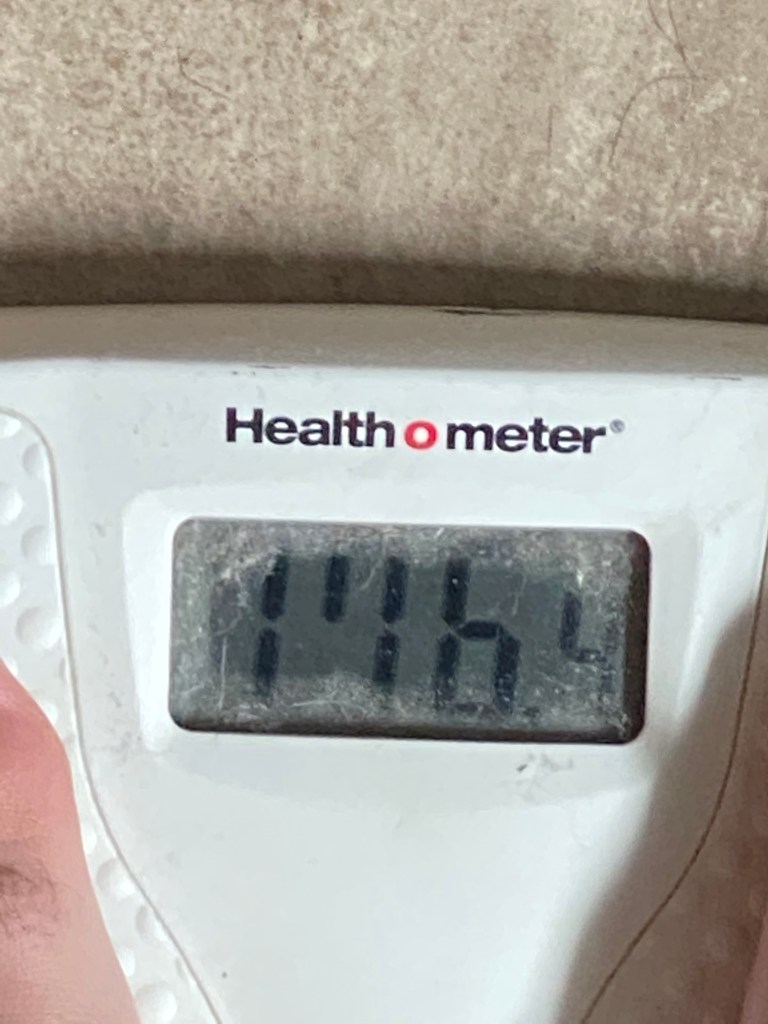
This week has been another interesting one when it comes to my health aspect. It has rained a lot, so I have not been able to get out to run as much. When I do however, I definitely appreciate it more. I am able to keep a consistent pace from week to week, and that is making me happier than I could have expected at the start of the semester. It is tough to put to words how the impact of the pandemic is affecting us all, but it is a change that has been interesting to say the least. All the daily activities I do have led to improvements that I could not get from just running, and I have found myself to be running for enjoyment and a workout rather than for the reasons I had previously (i.e. in high school).The pictures are tough to come by so I’ll focus on something positive that has come out of me running again. I am still feeling overweight in my own opinion, but I know that I am healthy and maintaining a constant weight has always been somewhat of a challenge when I was in high school. I have maintained the same weight since the start of the semester and I know that I am both stronger and in better shape than at that point, so I am happy with the way I am feeling today versus back then.

Ch. 11 – Cardiovascular Disease, Cancer, and Diabetes

This chapter was extremely in depth and provided large amount of information that I did not know previously. The first of these things that stood out to me was the increasing severity of CVD, or Cardiovascular Disease. I had previously know that CVD was the leading cause of death in the United States. However, I was shocked by the information that, “According to some sources, by 2035, nearly 45 percent of the U.S. population will have CVD” (Donatelle, 2019, p. 251). This surprised me because the section started off by saying that that death rate from CVD in the United States was on the decline in the past 10 years. On top of this, I also feel that our society talks about Cardiovascular health a great amount and people’s first instinct when it comes to getting in shape and/or working out often tends to be related to cardiovascular fitness. Despite this, it seems that we will have to improve upon our tactics to fight against CVD or else the future predicted by the above quote could become the reality.

The second thing that caught my eye in the chapter was the differentiation between different cancers. For example, Lung cancer is the most common among cancer-related deaths. This makes sense when we think about the tobacco problems in the country and in the world as a whole, among many other factors that may cause it. However, the thing that surprised me was that Breast Cancer, rather than the leading cause of cancerous death, Lung cancer, is the most common cancer. “Women have a 1 in 8 lifetime risk of being diagnosed with breast cancer. . . In 2017, approximately 252,710 women and 2,500 men in the United states will be diagnosed with invasive breast cancer for the first time” (Donatelle, 2019, p. 268). It is crazy to think about how common breast cancer is, especially compared to lung cancer, yet lung cancer kills at a higher rate.

The third thing that stuck out to me was Gestational Diabetes. We all know the obvious fact of the extra weight a woman takes on when pregnant. However, the fact that this can lead to diabetes is shocking. Gestational diabetes “is a state of high blood glucose during pregnancy, thought to be associated with metabolic stresses that occur in response to changing hormonal levels” (Donatelle, 2019, p. 278). Even more shocking in this subject is that “between 40 and 50 percent of women with gestational diabetes may progress to type 2 diabetes if they fail to make significant lifestyle changes” (Donatelle, 2019, p. 278). So, on top of the diabetes that occurs due to hormonal changes during pregnancy, women may also fall victim to type 2 diabetes if they do not immediately take up a healthy lifestyle again after the pregnancy.

In terms of my health aspect this week, I had a hard time progressing at all. I find myself enjoying running with all that is going on in the world rather than looking for massive improvements in my times. I know this should be considered a good thing, but I am having a hard time not getting on myself for not improving as much as I would hope. However, I am finding it a little bit easier to have a positive mindset when it comes to the enjoyment itself. I have definitely been distracted from running as much as I would like as well, as I have been again walking and playing with my dog as well as helping my dad with work around the house and yard. This week has been a positive one, but one that still comes with the usual struggles. Since I am having a hard time taking relevant pictures of myself(for obvious reasons) here is a picture of me and my dog after a nice, long walk this week.

Ch. 10 – Fitness

This chapter was relatively a review of things I had already known. However, that did not stop me from learning some new and interesting information on top of that. This chapter was all about fitness, including the benefits and best ways of measuring/attaining it. This has an extremely large connection to the health aspects we are attempting to attain this semester. The first thing that struck me in the chapter was the health benefit of improved bone mass and reduced risk of osteoporosis. “Regular weight-bearing and strength-building physical activities are recommended throughout life to maintain bone health and prevent osteoporotic fractures” (Donatelle, 2019, p. 228). this quote tells that regular exercise essentially limits the chance of osteoporosis and thus, the fractures that could come of the bone-decaying disease.Although hormones do play a large role in whether or not osteoporosis will occur, it is interesting to find out that regular exercise can be a contributing factor to limiting the chance for the disease.

The second thing that interested me in the chapter was the FIIT Principle for Cardiorespiratory Fitness. Although this was generally a review for me, the Time aspect of the FIIT Principle was one that provided new information to me. It was interesting to find that the ACSM “recommends that vigorous activities be performed for at least 20 minutes at a time, and moderate activities should be performed for at least 30 minutes” (Donatelle, 2019, p. 235). I had heard both 20 minutes and 30 minutes as minimums for exercise before in my life, knowing that it usually takes 20 minutes to reach overload during cardirespiratory exercise. However, this new information provided to me was able to make out which was correct; both were correct, just for different intensities of exercise.

The third thing that stuck out to me in the chapter was activity and exercise for special populations, specifically obese populations. When we tend to think of obese populations who are attempting to lose the weight and get into better shape, we think of them as doing the simplest activities, such as walking. However, it is generally safer for them to start off with swimming, as it is no impact exercise. It is most important that “Programs for individuals who are obese should emphasize physical activities that can be sustained for 30 minutes or more” (Donatelle, 2019, p. 241). This definitely makes sense in terms of their moderate exercise classification in order to get them up and running (figuratively), therefore, 30 minutes is the minimum amount of exercise they should be getting in order to make improvements.

My health aspect was here and there this week, but nothing dramatically negative happened. I’ve started walking with my dog on days that i do not run in order to get him out of the house as well as myself during the crazy time. Getting fresh air has definitely helped my spirits in this time and I have even lost a few pounds recently. I am also playing with my dog outside for hours at a time, as there is usually nothing else to do for obvious reasons. this has certainly helped in terms of getting my exercise in for the day and week respectively. I am enjoying the time that I can take to get exercise and it is definitely one of the factors that is making the quarantine a bit easier on a daily basis. I haven’t necessarily seen any big improvements in my intensity when I am on a run, but the fact that I am running and enjoying it is more important to me currently as I try to get back to a new normal for myself. Here are a couple of pictures of my dog and I, as well as him playing outside recently.

Ch. 9 – Weight management and Body Image

Chapter 9 was a chapter that made a large impact on me. The information withing the reading was very informative and provided new information as well as putting a name to many things I may have experienced or witnessed in the past without knowing exactly what it was. the first thing that stuck out to me in the chapter was the Mediterranean diet. This diet surprised me greatly, as it was heavily focused on beans, nuts, and olive oil, which are not necessarily what you think of when you think diet. However, it is “widely considered to be one of the most healthy, safe, and balanced diets” (Donatelle, 2019, p. 214). This was extremely surprising to me, as it did not strike me as a healthy diet, yet it is considered one of the best. i suppose that it being safe and balanced makes more sense, and that contributes to the outcomes of it being a more long-term effect diet.

The second thing that stuck out to me in the chapter was the instances of severe or dramatic weight loss. It was extremely surprising to me that, while they must be regulated highly by professionals, very-low-calorie diets are a plausible solution. We always hear about not getting enough calories being such a bad thing, yet this diet, while rare, is promoting just that. On top of this, such things as gastric bypass is a thing as well. “In gastric bypass, up to 70 percent of the stomach is sutured off, drastically reducing how much food a person can eat and absorb” (Donatelle, 2019, p. 216). It is crazy to think the lengths that some people have to go in order ot get back to a state in which they can become and remain healthy.

The final thing in the chapter that caught my attention was the effects of obesity. While we generally know that obesity can be a gateway to other health risks and diseases, it struck me that “Obese populations have a 42 percent higher annual health care cost than healthy-weight populations” (Donatelle, 2019, p. 205). While this is something that makes sense, it is not something that I initially considered when thinking of the effects of obesity. We often tend to think of the health aspects first rather than the life effects as well.

In terms of my health aspect, body image plays a big role. I guess that my post last week was a week too early, as I talked about body image there. While I don’t look at myself in a negative light when it comes to my body, I do know that I am slightly overweight , so I think that had a major implication on my health aspect. On top of this, I am constantly active, so I know that I am healthy and in shape, just not at the weight I wish to be at. However, I also look back on the times that I use to motivate myself during my health aspect and see an underweight kid. I definitely have a hard time seeing the best in myself and my body sometimes, but I do know that I can be appreciative at times. While I do think that we all may struggle with our body image at times, I think not only are our health aspects helping in terms of getting us on the path to improving that, but also, it might be showing us just how appreciative of our bodies we should be because we are now making ourselves better and healthier along the way. The picture I included this week is a telling one in terms of body image. This picture used to be one of my favorites because it reminded me of a great race in my career and served as motivation to keep going and aiming for great success. However, the picture now has a double meaning to me. I am still able to look back and appreciate the success the picture represents and the happiness I felt while running and, in particular, racing, but I now also see it as me at my skinniest weight and makes me realize that I never want to be as skinny as I was then. Some may look and scoff at this, but I do feel that cross country and track manipulated me into thinking that being underweight was healthy and the best way to get successful in the sport. However, I gained 10 pounds my senior year and not only felt healthier, but also performed better in my sport. Therefore, it taught me that I was not required to be underweight and did not have to starve myself to be successful. I have generally had a good relationship with food, my weight, and my body ever since.

Ch. 8 – Nutrition

This chapter was a nice return to a directly applicable topic to my health aspect. I would generally say that this chapter was previously known information for me, however, that did not stop me from learning some new things and taking a great deal of important information out of it. The first major piece of information from the chapter was that “Most experts believe that Americans should double their current consumption of dietary fiber” (Donatelle, 2019, p. 183). This surprised me, as they state right after this quote that a high-fiber diet can lead to obesity. However, I think the important point that they are trying to make is that we do not get enough fiber, however, there is still a limit that we need to maintain while increasing our own intake. Fiber is, after all, a key factor in the movement of food through the digestive system.

The second thing that stood out to me in the chapter was the benefits of vitamins. I previously knew of the importance and the general function of vitamins, but the chapter highlighted some new information that was intriguing to me. Vitamins “help maintain nerves and skin, produce blood cells, build bones and teeth, heal wounds, and convert food energy to body energy” (Donatelle, 2019, p. 186). This section of the chapter provided a plethora of functions of vitamins that I never knew and proves just how essential these vitamins are. In particular, vitamin D is highlighted greatly, as it regulates blood calcium levels, maintains bone health, and assists cell differentiation. Despite the great importance of this vitamin, it is not difficult to obtain, as 5-30 minutes of sunlight twice a week can do the trick.

The final thing that made an impression on me was the depth of the information on organic food. I never knew the rules to organic food labels, which I guess is partly due to the fact that I have never eaten organic in the first place. However, it was incredibly interesting to me that organic foods do not necessarily provide a greater nutritional benefit than normal food. As state in the chapter, “While organic meats provide higher fatty acid levels, consumer bran preferences, appearance of packaging, and texture appear to influence consumer perceptions more than actual nutritional benefits do” (Donatelle, 2019, p. 197). This is interesting to me, as the argument for organic versus non-organic seems much more heated than a simple packaging and “curb appeal” type of approach that studies have proven choices at the store to be.

My health aspect has been relatively the same this week. No crazy improvements have come, but I am beginning to accept that it is not what is most important. I have started to gain weight, which has been one of my biggest fears since high school. I think that the lense I view my health through has changed as I have matured, however. In high school, I was under 125 pounds until my senior year, due to the fact that I ran everyday for cross country. I was always afraid of being heavier than that, but now I am much heavier than that, yet I still think that I am in shape and I do not look at myself and think that I am overweight. That has had a direct impact on my health aspect, as well as the implications of nutrition on my aspect. As much as I am comfortable with the shape I am in, I still would like to generally lose a little bit of weight. This has generally led to me not getting the nutrients I need on a daily basis. In terms of my health aspect directly, I think that I am beginning to realize that I am not the runner I once was (and I haven’t been for a while). I can not run the pace that I use to run on a daily basis, but I should not expect myself to since I am not running the way I used to or for the purpose I used to. I am definitely still finding joy in running when I do, but I feel that I am beginning to accept the changes that have occurred and am finding it easier to not be so hard on myself.

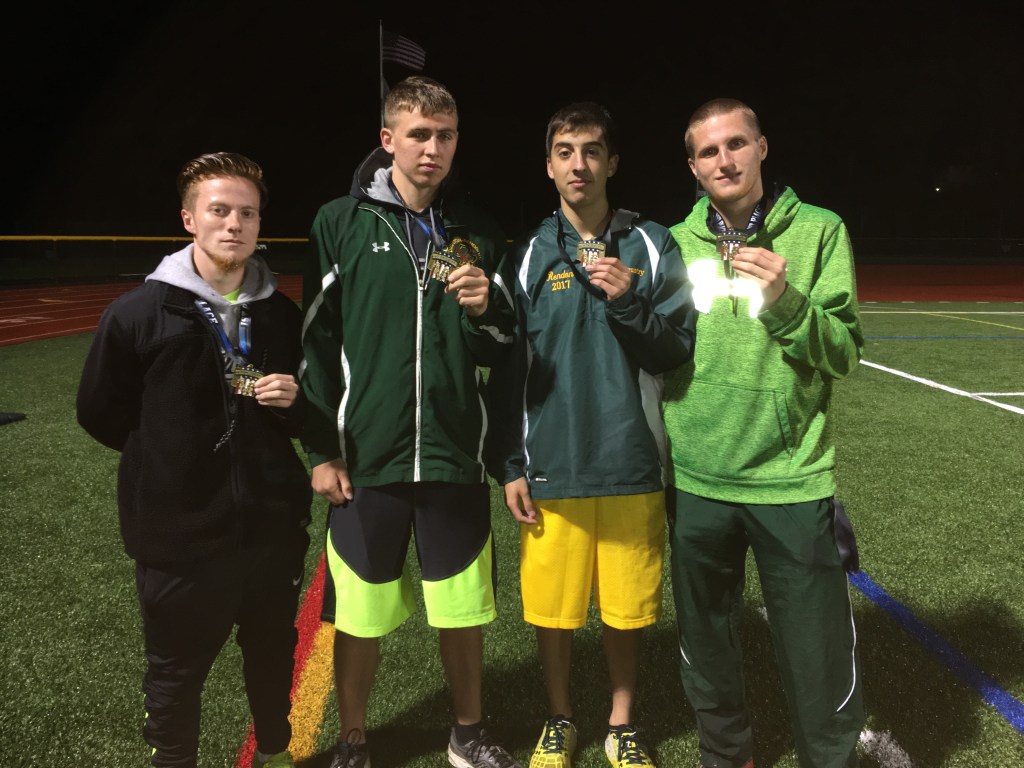
This week was another tough one to find a picture of myself that accurately represented how I feel, as well as the fact that I did not want to constantly post pictures of myself running of a treadmill, as that is all I can do at the moment. Therefore, I chose a picture of a relay race I ran in high school. The race I ran with some of my best friends, and the picture reminds me that as much as I am focused on cardiovascular health, running was also a benefit because it gave me some things that are bigger than the work I put in and the health I hope to get out of it: Friendship.

Ch. 7 – Alcohol and Tobacco

This was another informative and interesting chapter. There were many things that I learned for the first time, and many others that were extremely interesting to hear again. It was a difficult chapter once again to connect to the health aspect outside of the obvious negatives that can come from the use of alcohol and tobacco when it comes to the progression towards the ultimate goal that I set for myself. Despite this, chapter 7 was a definite learning experience when it came to the multiple things that stuck out to me. The first thing in the chapter that made an immediate impression on me was the fact that “Alcohol consumption is the top cause of preventable death among U.S. undergraduates” (Donatelle, 2019, p. 152). It is definitely something that crossed my mind that alcohol would be a large factor in the death rate of college-aged people, but I did not think that it was the number one cause. This not only struck me as surprising, but also quite sad. Alcohol is extremely prevalent on college campuses. I guess that this makes the statistic make a bit more sense, due to the frequency of alcohol consumption by college students. However, it is still surprising to see so much alcohol in college life, yet not necessarily see the negativity unless you experience it firsthand or a friend does. Despite this, it is extremely possible (even probable) for this negativity to occur and for possibly the worst to happen.

The second thing that stuck out to me in the chapter was the long-term effects of alcohol. the most surprising of these effects to me was cirrhosis. I had never heard of cirrhosis before, and the reality of it is as bad as it sounds. If a person continually drinks heavily, “the liver cells die, and damage becomes permanent” (Donatelle, 2019, p. 158) According to the chapter, this disease is relatively common, as it occurs just from the regularity of heavy drinking. If someone is a heavy drinker, they are immediately at risk to get cirrhosis. This can even be fatal, simply from an action as easy to commit as drinking a lot on a regular basis. Cirrhosis is definitely a scary disease and a threatening one tothose who like or fall back on drinking.

The third thing that drew my attention in chapter 7 was the association between college students and smoking. It came as a surprise to me that “college students are the targets of heavy tobacco advertising campaigns” (Donatelle, 2019, p. 165). I might be a bit biased, as I don’t generally watch that much television, but I have never seen a tobacco product commercial that, in my opinion, was aimed at college students. On top of this, it greatly surprised me when I read that ” when students are asked how many students they think have smoked in the last thirty days, they perceive that rates are as high as 75 percent” (Donatelle, 2019, p. 165). My perceived rate would be astronomically lower, at or below 15%, yet others feel very differently. In my two years at BSU and 1 prior year in college, I have only seen 2-3 people smoking on campus, and do not know anyone (personally) of my age who smokes. The statistics when it came to tobacco in relation to college students definitely surprised me in more ways that one.

In terms of my health aspect over the past few chaotic weeks, I have found ways to keep what I am doing interesting, but have somewhat struggled to make solid improvements. Being home has meant a lot of time with my dog. He is a ball of energy and is constantly begging to play outside. I am not exaggerating when I say that I spend around 3 hours outside with him running around the yard and playing fetch. I know that this definitely has an impact on how hard I can go when I run, but it is still very frustrating at times to not see the improvements that I hope for (whether or not they are far-fetched to begin with). I mentioned in my last blog post that I hoped being back where I first started to run would inspire me to get back into a groove and improve greatly, but I feel like it has only added unnecessary and unwanted stress to myself, as I can’t help but compared myself now to when I was at my best. I constantly remind myself to push through the negative thoughts, but they definitely find their way back. I try to forget about these thoughts by making my running more interesting. I try to run with my dog every so often (in hopes to tire him out as well), but he gets way to distracted to run for any beneficial amount of time, so it is more of a for fun type of thing. I also run on a treadmill in my basement, as crazy as it sounds, in order to make the running I do outside seem more eventful and less boring. All around, I would say that I am feeling a slight return of the enjoyment I once had running, but that is definitely stifled relatively easily once I looked down at my watch and judge what I have done so far. I am pushing myself to keep going, but it definitely gets difficult sometimes.

Ch. 6 – Addiction and Drug Abuse

Chapter 6 was yet another tough one when it came to comparing it to my health aspect. However, I again gained some great new and increased knowledge on matters involving addiction and drug abuse. The first thing that I learned from the chapter was how wide the range is for the different causes of addiction (the types of addiction). The obvious drug addictions are the ones that instinctively come to our minds, but it is just as important and difficult for those who suffer from process addictions. “Process addictions are behaviors known to be addictive because they are mood altering” (Donatelle, 2019, p. 130). These process addictions include gambling, compulsive buying, technology, work, and even exercise addictions. Prior to reading the chapter, I would have thought of some of these as addictions, but many I would not have thought initially that they could be categorized as such. The most surprising of these to me was the work addiction. Before reading the chapter, I would have simply considered it as excessive overworking due to necessity or overload. However, I now see that it is completely different in that those with a work addiction are often power-hungry and/or feel the need to be working nonstop in order to be good at their job.

The second thing that stood out to me in this chapter was how drugs affect the brain. Of course, I previously knew that drugs did affect the brain in the first place, but I was not aware of how and to what extent. Through the chapter, I learned that “All drugs that are addicting can activate the brain’s pleasure circuit” (Donatelle, 2019, p. 132). This information allowed me to make the connection between the pleasure that the drugs cause and thus how they can become so addictive. The drugs cause “dopamine-containing neurons” to “relay messages about pleasure to nerve cells in the limbic system” (Donatelle, 2019, p. 132).

The final piece of information that was new to me was how accessible drugs are to the general public. Of course, prescriptions are for the select person, however, there is no one to stop that person from selling their pills or simply giving them away if they have any leftover. Even with this fact, “Young and older adults hooked on painkillers are finding that heroin is cheaper and easier to obtain than prescription opioids” (Donatelle, 2019, p. 141). This is definitely something that is striking to me, as the accessibility of heroin being higher than that of prescription opioids is unimaginable. Accessibility to either (prescription opioids without your own prescription) is a bad thing, but heroin becoming a more readily available and accessible option is crazy.

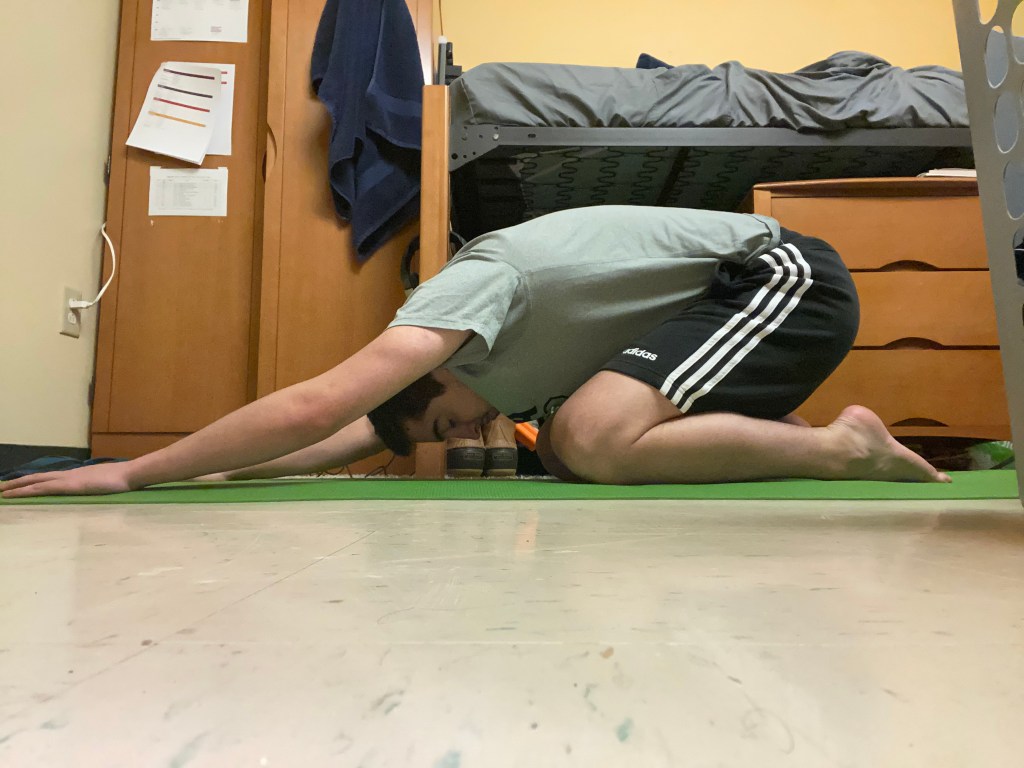
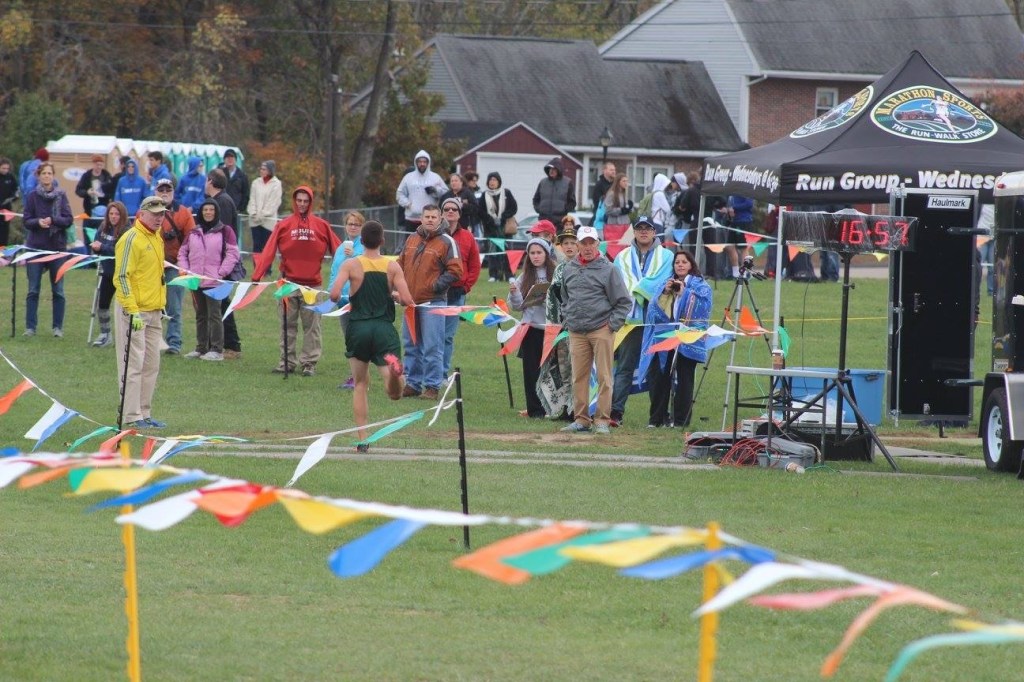
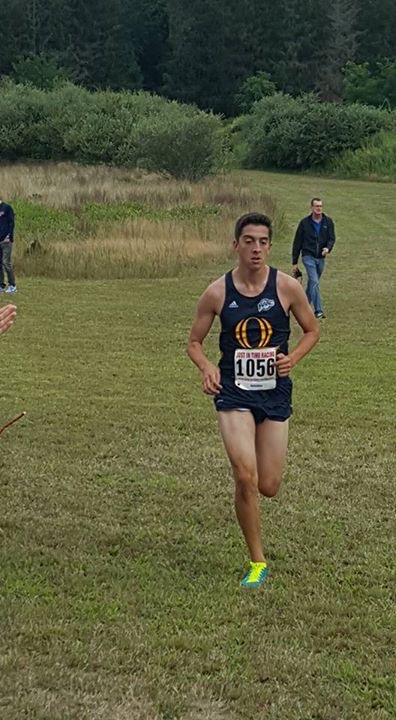
This week was another tough week in the progression towards my aspect. Despite being able to run a few times, I did not feel like myself and continued to struggle to keep the pace that I wanted to keep. I have a feeling that this might have to do with my class in which I am doing aerobic training as well, so this may be added fatigue to my body and making it difficult to run faster. I am doing well in my class in terms of improving and have even lost a few pounds, so I know that I am by no means out of shape anymore. I can continually run and not necessarily get tired, but I am finding it hard to get up to the pace that I want to. This is adding some unneeded stress to my life, so I continued doing yoga and meditation at night in order to relax. It has definitely been beneficial, as I find myself relieved of some stress afterward and I believe that I am sleeping better as well. I hope that spring break will give me a week of more relaxation where I can run back home where I first started in high school and potentially get some motivation from that. This is why I included a picture of myself from high school. This picture, like last week’s picture from my freshman year, serves as motivation for me. However, unlike last week where I took motivation from failure, I take motivation from the success that this picture reminds me of. This picture reminds me that I was the one who ran like I did and the times that I did in high school, so the only thing stopping me from getting closer to those marks is myself.

Ch. 5 – Reproductive Choices

This chapter was another that was difficult to interpret from the perspective of my health aspect. However, there were a few things that stood out to me throughout the chapter. The first of these things was the various contraceptive methods and the ways in which you can decide on one in specific. There are so many categories of questions to consider in order to choose the best method of contraception for your situation and ideologies. It is best to “Take some time to research the various methods, ask questions of your health care provider, and be honest with yourself and your partner about your own preferences” (Donatelle, 2019, p. 112). The fact that today’s world is surrounded by positive reinforcement and the ability to do things our way in order to make them as positive and effective as possible is a great thing. Asking questions regarding things such as whether you are comfortable with certain methods, convenience (financially, as a part of your health insurance, effort to use, etc.), how pregnancy would affect your life, and even our beliefs (Donatelle, 2019, pp. 112-113).

The second point that stood out to me was how much truly goes into planning for a pregnancy. I had the obvious preconceived notion of how much it could be between finances, the lifestyle changes that have to be made, and the burden of supporting another life, but there is much more to consider than I thought. The major factor that honestly surprised me was regarding paternal health. Obviously it would be a major negative to have an extremely unhealthy father, whether it be genetic disease or other possible source of health concern. However, “Fathers-to-be are encouraged to practice the same healthy habits as mothers-to-be because, by one route or another, dozens of chemicals studied so far appear to harm sperm” (Donatelle, 2019, p. 117). The obvious need for health is one thing, but the fathers-to-be being recommended to keep up with their partners’ health regiment is something that I never considered. However, now that I see it in the chapter, it makes perfect sense. The healthier the sperm, the healthier the possibility for the entire process of childbirth.

The third thing that stuck with me was the many causes of infertility. This was, alternatively, something that I did not know much about, if at all. prior to reading the chapter. It was extremely surprising to me how many ways there are for both males and females to become infertile. “An estimated 1 in 10 American couples experiences infertility” and, “Although the focus is often on women, in about one-third of cases, infertility is due to a cause involving only the male partner” (Donatelle, 2019, p. 124). With so many different causes for this infertility as well, it is no wonder why so many people live in fear of never being able to give birth to a child. Despite all the diseases that can cause infertility being devastating in their own right, the one that struck me as particularly shocking is that of low sperm count. I don’t know if it is the correlation of being male but the sheer amount of sperm cells necessary to produce a healthy and successful fertilization is astounding. 40 million sperm are released per millimeter of semen, however, if the count drops below 20 million, the fertility drops as well. Although this still seems like a huge number, it is not enough to guarantee successful fertility.

This week was a tough one in terms of the chapter and its relation to my health aspect. Therefore, I put a strong focus on that which motivates me and how I can improve outside of simply running. I have continued to do yoga and stretching throughout the day in order to both heal and relax my body. On top of this, I have also starting preparing a breakfast in advance, as I have a habit of skipping breakfast and never achieving the necessary calorie intake or nutrient balance necessary. Eating more is always a challenge to me, but I am trying my best lately to get the energy that I need into my body on a regular basis. In terms of my major focus this week, I have been drawing at memories that I know will drive me to work harder and smarter to reach my goal. I don’t know how healthy it is, but the picture I included this week is of myself my freshman year of college. I was at a different school, on the cross country team, and in the best cardiovascular shape of my life. However, the day this photo was taken was the last day I ever ran a cross country race. After the race, it was discovered that I had an injury and the injury took 9 months to diagnose. After that, the recovery had lengthened with the time it took to find out what was wrong and I eventually decided that I was no longer going to run competitively after transferring to BSU and not being able to run for nearly 18 months. Again, I do not know how healthy it is to use such a negative experience as a driving force in my pursuit to reach my goal, but I know that when I see this picture, I always remind my self how badly I want to be back in shape like I was in the picture and how much I miss the sport I loved before the injury.

Design a site like this with WordPress.com
Get started