This chapter was another that was difficult to interpret from the perspective of my health aspect. However, there were a few things that stood out to me throughout the chapter. The first of these things was the various contraceptive methods and the ways in which you can decide on one in specific. There are so many categories of questions to consider in order to choose the best method of contraception for your situation and ideologies. It is best to “Take some time to research the various methods, ask questions of your health care provider, and be honest with yourself and your partner about your own preferences” (Donatelle, 2019, p. 112). The fact that today’s world is surrounded by positive reinforcement and the ability to do things our way in order to make them as positive and effective as possible is a great thing. Asking questions regarding things such as whether you are comfortable with certain methods, convenience (financially, as a part of your health insurance, effort to use, etc.), how pregnancy would affect your life, and even our beliefs (Donatelle, 2019, pp. 112-113).
The second point that stood out to me was how much truly goes into planning for a pregnancy. I had the obvious preconceived notion of how much it could be between finances, the lifestyle changes that have to be made, and the burden of supporting another life, but there is much more to consider than I thought. The major factor that honestly surprised me was regarding paternal health. Obviously it would be a major negative to have an extremely unhealthy father, whether it be genetic disease or other possible source of health concern. However, “Fathers-to-be are encouraged to practice the same healthy habits as mothers-to-be because, by one route or another, dozens of chemicals studied so far appear to harm sperm” (Donatelle, 2019, p. 117). The obvious need for health is one thing, but the fathers-to-be being recommended to keep up with their partners’ health regiment is something that I never considered. However, now that I see it in the chapter, it makes perfect sense. The healthier the sperm, the healthier the possibility for the entire process of childbirth.
The third thing that stuck with me was the many causes of infertility. This was, alternatively, something that I did not know much about, if at all. prior to reading the chapter. It was extremely surprising to me how many ways there are for both males and females to become infertile. “An estimated 1 in 10 American couples experiences infertility” and, “Although the focus is often on women, in about one-third of cases, infertility is due to a cause involving only the male partner” (Donatelle, 2019, p. 124). With so many different causes for this infertility as well, it is no wonder why so many people live in fear of never being able to give birth to a child. Despite all the diseases that can cause infertility being devastating in their own right, the one that struck me as particularly shocking is that of low sperm count. I don’t know if it is the correlation of being male but the sheer amount of sperm cells necessary to produce a healthy and successful fertilization is astounding. 40 million sperm are released per millimeter of semen, however, if the count drops below 20 million, the fertility drops as well. Although this still seems like a huge number, it is not enough to guarantee successful fertility.
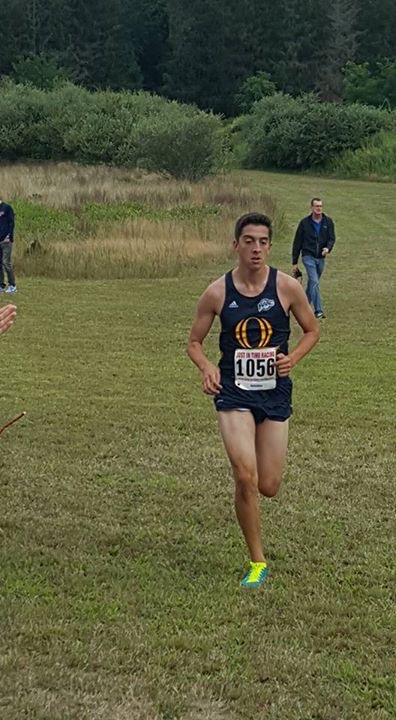
This week was a tough one in terms of the chapter and its relation to my health aspect. Therefore, I put a strong focus on that which motivates me and how I can improve outside of simply running. I have continued to do yoga and stretching throughout the day in order to both heal and relax my body. On top of this, I have also starting preparing a breakfast in advance, as I have a habit of skipping breakfast and never achieving the necessary calorie intake or nutrient balance necessary. Eating more is always a challenge to me, but I am trying my best lately to get the energy that I need into my body on a regular basis. In terms of my major focus this week, I have been drawing at memories that I know will drive me to work harder and smarter to reach my goal. I don’t know how healthy it is, but the picture I included this week is of myself my freshman year of college. I was at a different school, on the cross country team, and in the best cardiovascular shape of my life. However, the day this photo was taken was the last day I ever ran a cross country race. After the race, it was discovered that I had an injury and the injury took 9 months to diagnose. After that, the recovery had lengthened with the time it took to find out what was wrong and I eventually decided that I was no longer going to run competitively after transferring to BSU and not being able to run for nearly 18 months. Again, I do not know how healthy it is to use such a negative experience as a driving force in my pursuit to reach my goal, but I know that when I see this picture, I always remind my self how badly I want to be back in shape like I was in the picture and how much I miss the sport I loved before the injury.
 BSU Health 102 - Kyle Rendon