Chapter 1 focused on the many factors of our health and how we can improve upon it, as well as the influences that we may or may not have control over. The most important factor to improve our health is preparation. So often, people go into an activity that can lead to what is ultimately their long-term goal with no plan as to how to achieve that goal. Through strategies such as SMART goal setting, anticipating and knowing your potential barriers, and getting help from others to attain your goal, the process can be a much more successful one.
The topic in chapter 1 that had the most impact on me upon reading it was about short-term goal setting, better known in preparation as shaping. Shaping gives you the ability to see improvement more easily as well as to attain your goals in a more efficient way. In regards to my aspect for this semester, cardiovascular health is heavily based in shaping. By using shaping, I can set target goals for running distances in a week, running times in a week, and even how many times I want to run total in a week. In the end, the way that you shape your exercise can lead to a better development towards your ultimate goal as long as you are prepared for the long haul. “Your current habits didn’t develop overnight and they won’t change overnight, either” (Donatelle, 2019, p. 14).
When it comes to setting SMART goals, they must be Specific, Measurable, Action-oriented, Realistic, and Time-oriented (Donnatelle, 2019, p. 14). goals that have true significance to the future development and success at achieving the ultimate goal are Specific and Measurable. The most important aspect of these SMART goals is that they are attainable. “Knowing that your goal is attainable increases your motivation. This, in turn, leads to a better chance of success and to a greater sense of self-efficacy – which can in turn motivate you to succeed even more” (Donatelle, 2019, p. 14). SMART goals will be a large factor in my success and progress towards my ultimate goal of running a 5k in under 19 minutes. I will not instantly be able to run the same time that I ran in high school while training daily for that purpose. I will most likely not even be able to run 19 minutes right away. The purpose of the SMART goals will be to gradually work up to a 19 minute 5k over the course of the semester while keeping my motivation high and seeing progress throughout. SMART goals to better my chance of success would be to run for 20 minutes every time I run this week (which I was able to achieve). Next week, a SMART goal would be to run for 30 minutes every time that I run. In the future, variants of SMART goals would be through runs of certain distances or keeping up certain paces on my runs.
The third, and possibly most important, topic I found to be essential is the anticipation of barriers and dealing with them. Running comes with its ups and downs. The simplicity of a good and bad day can make the difference between a 19 minute 5k and a 22 minute 5k. the potential for injury is also high in running, especially since I have not run consistently in nearly 2 years. However, the goals that we can anticipate are the ones that we need to focus on and attempt to avoid and fight against. “Even with the strongest motivation, overambitious goals can derail change” (Donatelle, 2019, p. 14). An overambitious goal for me would be trying to run a 19 minute 5k right now, or even trying to run 4 miles at too fast of a pace (i.e. 4 miles in 25 minutes – 6:15 per mile). By avoiding overambitious goals such as these, I can take the smaller but more beneficial steps towards the ultimate goal. Likewise, my preparation relies heavily upon the support I get. Without support, or even with support from those who may oppose the attainment of your ultimate goal, the climb to the top of the mountain will be sluggish and just that much harder to complete (Donatelle, 2019, p. 15). In my case, my dad was an avid supporter of my running career while I was in high school. When I was thinking of my ultimate goal, I asked his opinion on my setting a time of 19 minutes for a 5k as my goal. He told me that it was a good goal, but also that he wouldn’t be surprised if I reached 18 minutes as well. On top of this, my best friend is running with me every time I run. This gives me the extrinsic motivation of not only being with someone to take the stress off of the running but also the reassurance that I am helping someone else benefit from my actions as well (as he is trying to lose weight and get into better shape).
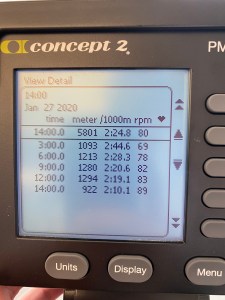
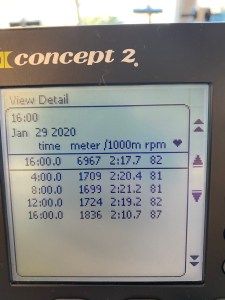
My progress this week was hard to view at times. There were days when I would get up to run and would feel like it was not my day. I struggled through some runs and even had to cut one short that I was hoping to get to 30 minutes on. However, with the new knowledge of shaping and setting SMART goals, I know that the 20 minutes I ran instead of 30 was still a successful step in the right direction. On top of my runs, One of my classes is cardiovascularly intense. In the class, I ride a bike with the intention of viewing, analyzing, and improving upon the results and statistics of my workout. Over the course of the week, I was able to improve my pace from the first session to the second session despite having a 14% increase in the duration of the workout. I think that the goals I set based on the information in chapter 1 is what will keep me on track and help me keep my eye on the prize for the current and eventual progress I want to make towards my ultimate goal.
 BSU Health 102 - Kyle Rendon